



Dental

Book Appointment

Pulpotomy vs. Pulpectomy: Root Canal Treatment for Baby Teeth Explained for Parents in Pakistan

Pediatric dentist checking a child’s baby teeth before pulpotomy or pulpectomy baby root canal treatment
A child’s Toothache can make eating and sleeping difficult. When a cavity reaches the tooth’s nerve, a simple filling may no longer help. Your dentist might recommend Pulpotomy or Pulpectomy to save the affected tooth.
Many parents worry about Root canal treatment for baby teeth. They wonder whether the procedure hurts or affects permanent teeth. Understanding Pulpotomy vs. pulpectomy helps you make an informed choice. This guide explains both treatments and their costs in Pakistan.

The Pulpotomy vs Pulpectomy: What is the Difference?

The main Difference between pulpotomy and pulpectomy is how much infected or damaged pulp the dentist removes. A pulpotomy removes the Coronal pulp inside the tooth’s crown. A pulpectomy removes pulp from the crown and root canals.

Both procedures aim to preserve Primary teeth until they naturally fall out. However, they treat different pulp conditions. A pulpotomy needs suitable living root pulp. A pulpectomy may treat infected or dead pulp when the tooth can still be saved.

Feature

Pulpotomy

Pulpectomy

Pulp removal

Crown portion only

Crown and root canals

Pulp condition

Suitable vital root pulp

Irreversibly damaged or dead pulp

Treatment type

Vital pulp therapy

Non-vital pulp therapy

Root canal cleaning

Usually not required

Required

Main purpose

Preserve healthy root pulp

Remove diseased pulp

Final restoration

Often a crown

Often a crown

What is a Pulpotomy?

A Pulpotomy is a type of Vital pulp therapy that preserves a tooth’s living root pulp. The dentist removes the affected tissue from the crown. Healthy root tissue remains inside the tooth to support its continued function.

Dentists often recommend Pulpotomy for baby teeth when decay reaches the pulp, but the root pulp remains suitable. A Deep cavity in baby teeth does not always require complete nerve removal. The dentist must first assess the tooth carefully.


How Does a Pulpotomy Work?

During the Pulpotomy procedure, the dentist first gives Local anesthesia to numb the area. Next, they remove decay and open the pulp chamber. They remove the crown pulp and check the remaining tissue for signs of inflammation.

Once bleeding is controlled, the dentist places a suitable Pulp medicament over the remaining pulp. The tooth then receives a protective Tooth restoration. A crown may provide better protection when extensive decay has weakened the tooth.

Which medicaments are used in a pulpotomy?

Modern Pulpotomy medicaments include MTA and Biodentine. Both are calcium silicate materials that help protect remaining pulp tissue. An MTA pulpotomy or Biodentine pulpotomy is commonly considered for suitable vital primary teeth.

Current evidence supports Calcium-silicate pulpotomy using Calcium-silicate cement. Older materials include Ferric sulfate and formocresol. However, current AAPD guidance favors calcium silicate cement over these older options for vital primary tooth pulpotomy.

What Is a Pulpectomy?

A Pulpectomy removes diseased pulp from the crown and root canals. Dentists may recommend Pulpectomy for baby teeth when the pulp has suffered irreversible damage or has died. This procedure removes the source of infection inside the tooth.

During the Pulpectomy procedure, the dentist cleans and disinfects the canals. They may use carefully controlled Sodium hypochlorite irrigation. Next, they place a suitable Root canal filling material for baby teeth to seal the cleaned spaces.

Is a Pulpectomy a Root Canal?

Yes. A pulpectomy is a form of Baby tooth root canal treatment. It is also called a Root canal for milk teeth. Unlike adult root canals, this treatment must account for the natural changes in developing primary teeth.

A Root canal in primary teeth usually uses Resorbable filling material for primary teeth. This material should be compatible with natural root resorption. Suitable Resorbable root canal filling material helps protect the developing permanent tooth while preserving the baby tooth.

How Does the Dentist Decide Which One Your Child Needs?

A dentist begins with a Clinical examination and reviews your child’s symptoms. They may take Dental X-rays to assess the roots and surrounding bone. A Radiographic evaluation helps identify infection and changes that cannot be seen directly.

For Pulp infection in children, treatment depends on the pulp condition. Irreversible pulpitis or Necrotic pulp may require pulpectomy or extraction. A suitable living root pulp may allow Vital pulp treatment for children instead of Non-vital pulp treatment.

Why Treat a Milk Tooth That Will Fall Out Anyway?

Smiling child at pediatric dentist with mother, showing why treating a milk tooth with baby root canal matters

Healthy Milk teeth help children chew food and speak clearly. They also preserve space for permanent teeth. Severe Tooth decay in children can cause pain and infection. Treating the affected tooth may prevent these problems from getting worse.

Sometimes Saving an infected baby tooth is better than early Baby tooth extraction. Losing a primary molar too soon may affect tooth spacing. In certain cases, a dentist may recommend a Space maintainer after extraction to protect the developing bite.

Is a Pulpectomy Safe for Children and Does a Pulpotomy Hurt?

Both treatments are established forms of Pediatric dental treatment when performed for the right reasons. Dentists use Local anesthesia to reduce pain during treatment. Some children may need additional support or carefully selected Conscious sedation.

Mild Pain after pulpotomy can occur once the numbness wears off. Most children experience manageable discomfort. However, increasing pain or swelling needs dental attention. Proper diagnosis and treatment planning help reduce complications during Baby tooth root canal recovery.

What evidence is there for successful treatment?

Research shows favorable outcomes for properly selected pulp treatments. However, pulpotomy and Pulpectomy success rates vary with diagnosis and technique. Restoration quality and follow-up also affect results.
The American Academy of Pediatric Dentistry provides evidence-based recommendations for primary tooth pulp treatment. Its guidance supports calcium silicate cement pulpotomy for suitable vital primary teeth. Pulpectomy outcomes depend on several factors, including root condition and filling quality.
 

Does My Child Need A Stainless Steel Crown For Baby Teeth?

Pediatric dentist showing a child’s dental X-ray to a parent to decide between pulpotomy and pulpectomy

A Stainless steel crown for baby teeth often protects a tooth after pulp treatment. It covers the weakened tooth and reduces the risk of further damage. A Crown after baby tooth root canal also helps prevent bacteria from entering the treated area.

For badly damaged molars, a Stainless steel crown is often a reliable choice. Some parents prefer a tooth-colored Zirconia crown for appearance. However, the dentist considers remaining tooth structure and bite conditions before recommending either option.

Is Pulpotomy Possible in Adults?

Yes. Pulpotomy in adults is possible when the tooth meets specific treatment requirements. Dentists may use Vital pulp therapy to preserve living pulp in selected permanent teeth. This approach can sometimes avoid complete root canal treatment.

Unlike baby teeth, adult teeth do not naturally fall out. Their treatment needs differ because of root structure and pulp condition. Modern Pediatric dentistry and adult dental care both use evidence-based methods to protect healthy pulp whenever appropriate.

What is the Pulpotomy/Pulpectomy Cost in Pakistan?

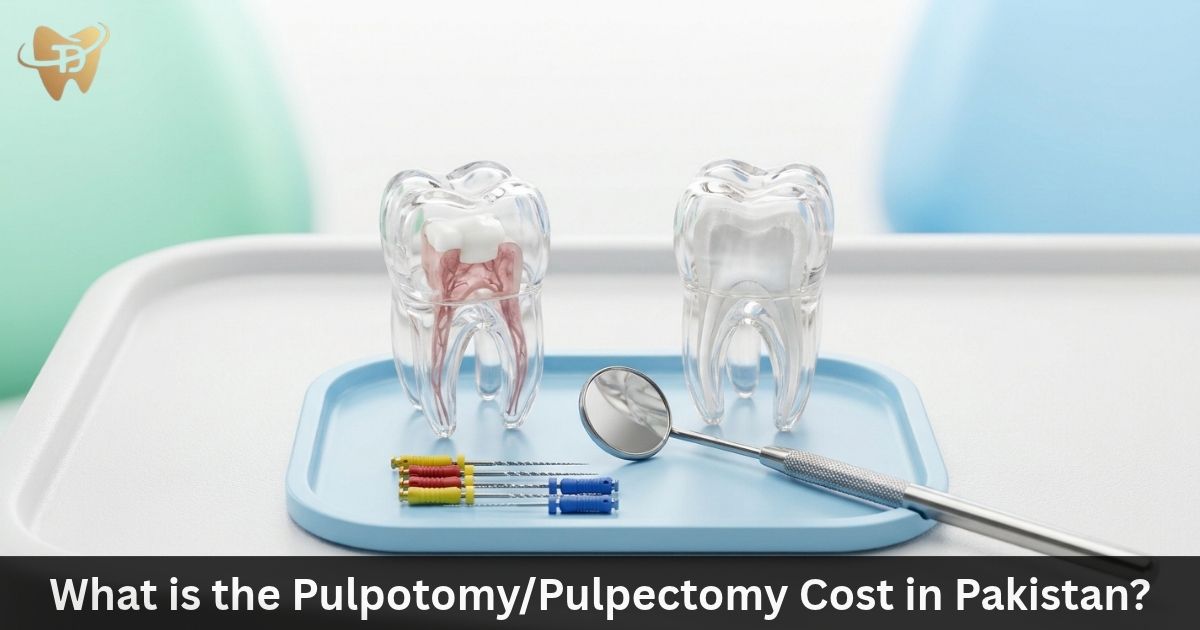
Dental tooth models with endodontic files and mirror showing pulpotomy and pulpectomy cost in Pakistan

The Baby root canal cost in Pakistan depends on the tooth’s condition and treatment complexity. The Pulpotomy cost in Pakistan may differ from the Pulpectomy cost in Pakistan because pulpectomy requires cleaning and filling the root canals.

Parents searching for a Pediatric dentist in Lahore should request a complete treatment estimate. Clinics offering Pediatric dentistry in DHA Lahore may charge separately for X-rays and crowns. A qualified Children’s dentist in Lahore can explain the expected costs after examination.

Prices vary between clinics. Current verified local price ranges are not available here, so an exact amount would be unreliable.

Aftercare: What Parents Should Watch For

Good aftercare helps your child recover comfortably. Avoid hard foods until numbness disappears. Continue gentle brushing around the treated tooth. Watch for Baby tooth infection symptoms such as persistent Gum boil formation or increasing Facial swelling.

A worsening Dental infection needs prompt professional attention. Regular checkups help dentists monitor Root resorption in primary teeth and Permanent tooth development. Preventive care such as Fluoride treatment and Dental sealants may also reduce future cavities.

Conclusion

Choosing between pulpotomy and pulpectomy depends on the condition of your child’s tooth. Both treatments can help preserve baby teeth when used appropriately. Early care for Deep tooth decay may prevent more serious problems.

If your child develops persistent pain or swelling, arrange a dental examination. Timely Infected baby tooth treatment may help avoid Dental extraction. A pediatric dentist can recommend the safest suitable option for your child.

FAQ

Yes. A general dentist with appropriate training can perform a pulpotomy, especially in children. However, complex cases may require a pediatric dentist.

A pulpectomy removes all pulp tissue from the tooth and prepares the canals for filling. Pulpal debridement cleans infected tissue and debris, often as an initial step before completing root canal treatment.

Yes. Pulpectomy is generally safe for children when performed correctly. It helps remove infection, relieve pain and preserve baby teeth until they naturally fall out.

A pulpotomy removes inflamed or infected pulp from the tooth's crown while preserving healthy root pulp. It helps relieve pain and maintain the natural tooth.

Neither is always better. Pulpotomy is preferred when the root pulp is healthy, while root canal treatment is needed when inflammation or infection extends into the root canals.

Calcium hydroxide and iodoform-based pastes are commonly preferred for primary teeth because they are resorbable and suitable for developing mouths. The best choice depends on the tooth and clinical condition.