
PFM vs Zirconia Crowns: Preparation, X-Ray, Anterior Teeth, Cost & Strength

Choosing the right dental crown can feel confusing when you hear about so many options. PFM vs Zirconia Crowns is a common comparison because both materials can restore damaged teeth and improve your smile. PFM crowns combine metal with porcelain while zirconia crowns use a strong ceramic material. Each option has its own benefits and limitations. Your dentist may consider the tooth location, bite, appearance, and remaining tooth structure before making a recommendation.
PFM crowns have a long history in restorative dentistry. Zirconia crowns offer a metal-free alternative with strong performance and a natural appearance. In this guide, you will learn about crown preparation and cost before choosing the right option for your tooth.
What are PFM and Zirconia Crowns?
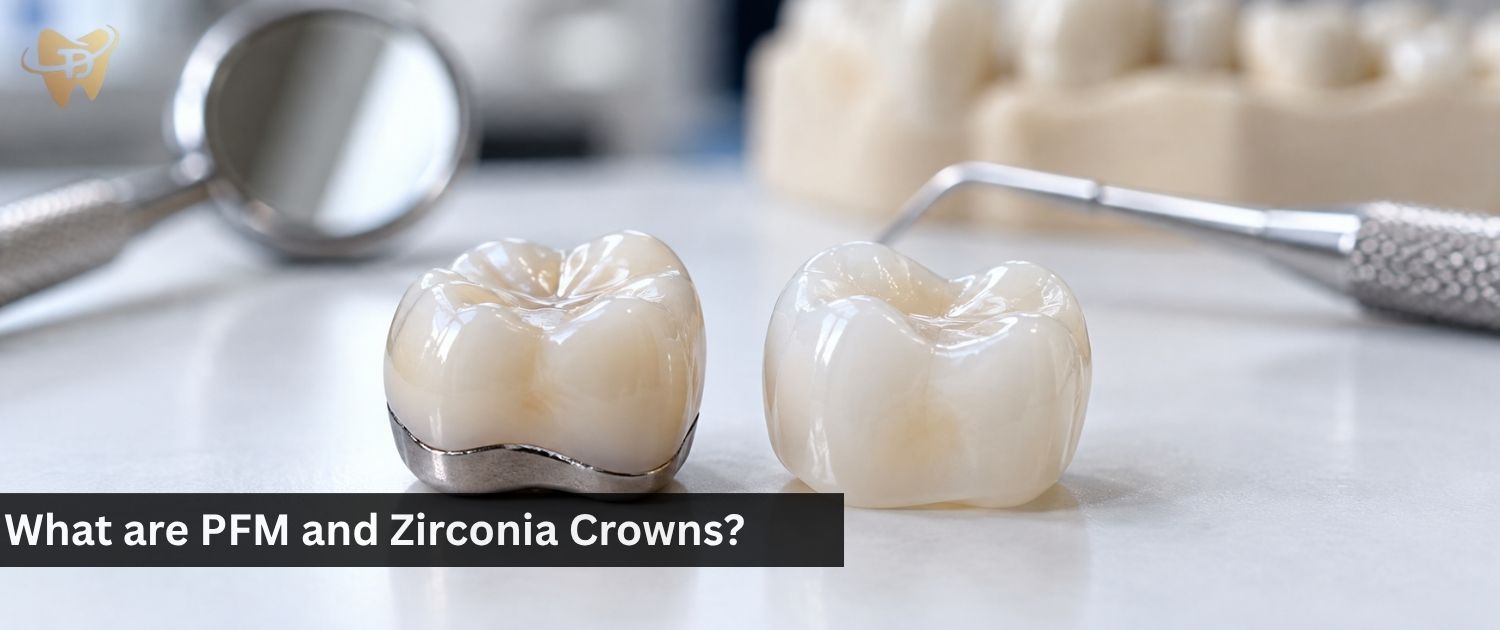
PFM crowns combine a metal framework with a porcelain layer. The metal provides structural support while the outer porcelain creates a tooth coloured restoration. This design helped make PFM crowns a popular choice for many years. They can work well when a dentist needs a balance between strength and appearance.
Zirconia crowns use zirconia ceramic rather than a metal base. Modern zirconia is not one single material. Different products have different levels of yttria and therefore different strength and translucency. Monolithic zirconia contains zirconia throughout the crown. More translucent versions can provide better aesthetic appearance. The ADA explains that zirconia properties change with formulation. Higher translucency can come with lower strength.
PFM vs Zirconia Crown: What Is the Main Difference?
The simplest difference between PFM and zirconia crowns is their basic structure. PFM uses metal under porcelain. Zirconia uses a ceramic structure without a metal framework. That difference can affect the crown’s appearance near the gums. It can also influence the dentist’s choice of crown material and crown design.
PFM can provide excellent clinical durability. Zirconia can also provide strong performance when the correct formulation and design are selected. Modern dental technology has expanded the options available to dentists. CAD/CAM crowns can now be designed digitally and produced through a precise digital workflow. The ADA notes that CAD/CAM technology has greatly expanded the use of ceramic restorations.
Feature | PFM Crown | Zirconia Crown |
Main structure | Metal and porcelain | Zirconia ceramic |
Metal-free | No | Yes |
Appearance | Good | Can be highly natural |
Strength | Strong | Strong |
Front teeth | Possible | Common option |
Back teeth | Common | Common |
Gumline appearance | May show metal in some cases | No metal margin |
Digital production | Available | Common |
Material options | Established | Several formulations |
PFM vs Zirconia Crown Preparation
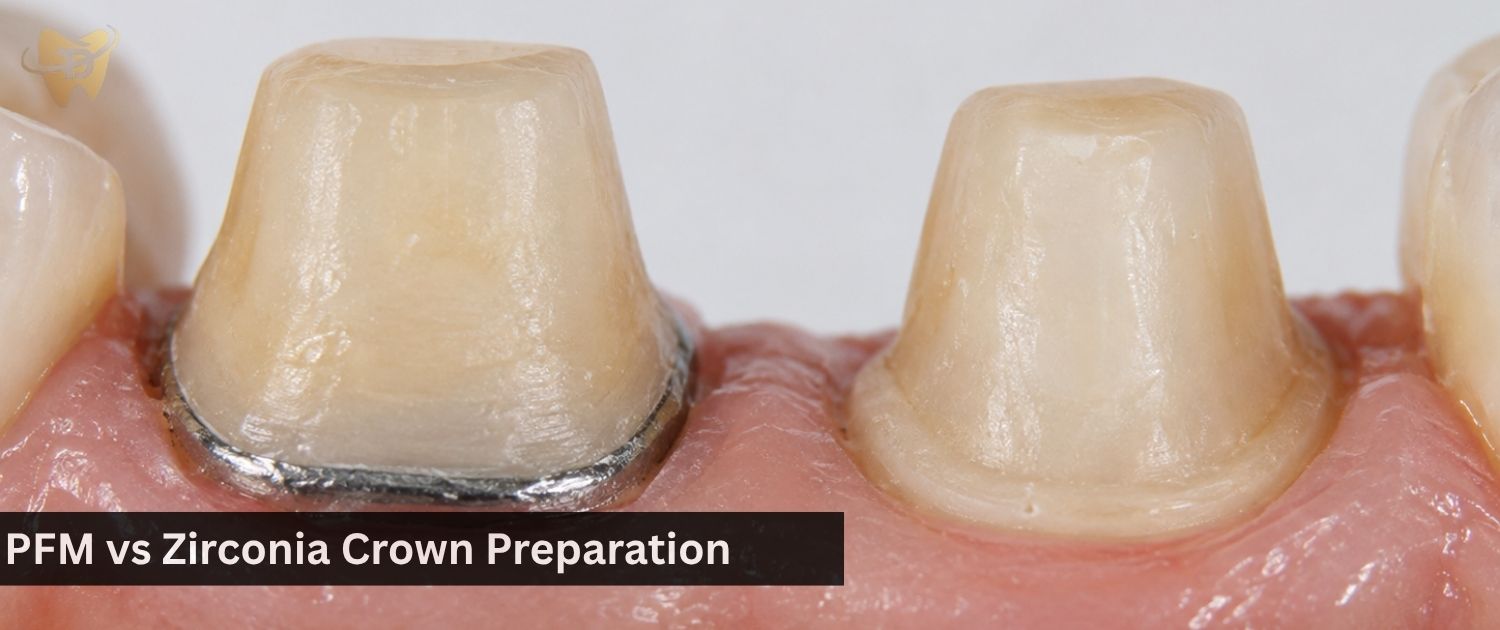
PFM crown preparation starts with an examination of the tooth. Your dentist may take dental radiographs before treatment. The dentist then removes damaged areas and creates space for the crown. This process is called tooth preparation. The amount of tooth reduction depends on the tooth and the restoration being planned.
With zirconia crown preparation the dentist still needs enough space for the restoration. The required space can vary because zirconia comes in different types. Crown thickness also depends on the material and design. This is why PFM vs zirconia crown preparation cannot be reduced to one fixed measurement. Your dentist must consider the remaining tooth structure, bite, crown margin, and available interocclusal space. Material choice and preparation design should match the clinical situation.
The usual crown treatment process includes examination, preparation, scanning or impressions, laboratory fabrication, temporary protection when needed, and final crown placement. Some practices use digital dental scanning instead of traditional impressions. This can create a digital model for the dental laboratory. The final restoration is then checked before cementation or bonding.
PFM vs Zirconia Crown X-Ray: What Can You See?
The PFM vs zirconia crown X-ray question often comes from patients who already have a crown. A dental X-ray does not simply tell your dentist which crown is better. Instead it helps the dentist inspect the tooth and tissues around it. The dentist may look for tooth decay, changes around the root, bone loss, or problems with an existing restoration.
PFM contains metal so its metal component is clearly visible on dental radiographs. Zirconia can also be seen because it is radiopaque. The exact appearance depends on the restoration and its thickness. An X-ray can help your dentist investigate a painful crown. However it cannot always reveal every problem underneath a restoration. Clinical examination remains important.
If you have a root canal treated tooth, radiographs can be especially useful during diagnosis and follow-up. The dentist may evaluate the root canal filling and surrounding bone. An old crown can sometimes remain functional for years. Yet a new problem can still develop beneath it. That is why symptoms such as persistent pain or swelling deserve professional attention.
PFM vs Zirconia Crown for Anterior Teeth
The PFM vs zirconia crown for anterior teeth discussion is different from choosing a crown for a molar. Your front teeth appear whenever you smile or speak. Therefore anterior crowns need careful attention to color, shape, light reflection, and gum position. The dentist also considers gum contour, facial features, lip position, and overall smile harmony.
Zirconia can be a useful choice for a visible front tooth when the selected formulation offers the required appearance. Some modern zirconia products have improved translucency compared with older versions. PFM can also look attractive when designed and layered well. However the metal underneath can sometimes influence the gumline appearance. The best result depends on the material, laboratory work, shade matching, and restoration design.
Imagine replacing a dark or damaged front tooth. The dentist does not simply choose the whitest crown. Instead the team considers the neighboring teeth and surrounding gum. Good shade matching helps the restoration blend into your smile. A crown that matches your tooth but ignores its shape may still look artificial. That is why careful treatment planning matters.
PFM vs Zirconia Crown Cost in Pakistan
The PFM vs zirconia crown cost can vary greatly between countries and clinics. This matters for USA readers who may research overseas treatment. Terms such as zirconia crown cost in Pakistan, PFM crown cost in Pakistan, and dental crown cost in Pakistan describe a different healthcare market. They should not be treated as typical U.S. prices.
The same principle applies to searches for a PFM crown in Lahore, zirconia crown in Lahore, or dental crowns in Lahore. Clinic location, dentist experience, laboratory quality, crown material, technology, and additional treatment can all affect the final fee. Patients comparing PFM vs zirconia crowns in Lahore should ask for a complete written estimate rather than comparing one crown price alone.
For U.S. patients the final cost can also depend on dental insurance. Your plan may have different rules for deductibles, annual limits, waiting periods, and coverage percentages. A root canal or core buildup can add to the treatment fee. Therefore factors affecting dental crown cost include more than the crown itself.
Cost factor | Why it matters |
Crown material | Different materials have different laboratory costs |
Dentist | Fees vary by experience and location |
Laboratory | Advanced laboratory work can affect price |
Tooth condition | Extra treatment may be required |
Insurance | Coverage varies by plan |
Technology | Digital workflows may change the treatment process |
Follow-up care | Some clinics include additional visits |
PFM vs Zirconia Crown Strength
The PFM vs zirconia crown strength comparison needs more care than simply asking which material is stronger. PFM has a strong metal core. Zirconia can also have very high strength. Yet zirconia is available in several formulations. Some emphasize strength while others provide greater translucency.
The ADA reports that zirconia can have very high flexural strength. It also explains that increasing yttria can increase translucency while reducing strength. This means the phrase “zirconia crown strength” does not describe one universal number. The exact zirconia formulation, restoration design, and clinical use all matter.
A crown also faces forces from chewing. Your bite force, occlusion, and habits can change the stress placed on it. Someone with severe bruxism or frequent grinding and clenching may place much higher loads on a restoration. A dentist may therefore choose a material and design based on the patient’s bite rather than appearance alone.
Research also shows that real-world outcomes can be quite good for both materials. One long-term private-practice study followed more than 2,000 posterior crowns for an average of 7.4 years. It reported very similar survival probabilities for PFM and zirconia-based crowns in that group.
This is an important point. Crown durability does not depend on material alone. Preparation, fit, stress distribution, cementation, bite, oral hygiene, and patient habits all matter. A strong material cannot compensate for poor treatment planning.
The Best Clinic in Lahore, Pakistan for PFM or Zirconia Crowns
Patients searching for restorative dentistry in Lahore or crown treatment in Lahore should look beyond the advertised crown name. A good clinic should begin with a proper examination. The dentist should explain why a specific ceramic crown or PFM restoration suits your tooth.
When comparing a zirconia crown in Lahore with a PFM crown in Lahore, ask about the dental laboratory and manufacturing process. Find out whether the clinic uses digital dental scanning and a controlled digital workflow. Ask whether the restoration is monolithic zirconia or layered zirconia. These details can affect both appearance and performance.
The same advice applies anywhere in the world. A good crown consultation should include discussion of the damaged tooth, healthy tooth structure, bite, gum health, and aesthetic goals. Your dentist should also explain the expected treatment sequence. If you are traveling abroad for treatment, consider how follow-up care will work after you return home.
PFM vs Zirconia: Which One Is Better?
The question “which is better PFM or zirconia crown” has no single answer for every tooth. A dentist may choose PFM when its metal framework, established clinical history, and design suit the case. Zirconia may be considered when a metal-free crown, strength, or specific aesthetic goal matters more.
For PFM vs zirconia for front teeth, appearance and gumline blending often receive close attention. For PFM vs zirconia for back teeth, chewing forces and available space may become more important. A dentist must also consider the opposing teeth, occlusion, tooth position, and remaining structure.
The best approach is personalized. Your dentist can compare the functional durability, aesthetic needs, and expected crown longevity for your specific tooth. The goal is not to choose the most fashionable material. It is to choose a restoration that fits your tooth and your needs.
How Dentists Choose Between PFM and Zirconia
During personalized treatment, the dentist considers the tooth’s condition and the patient’s goals. A damaged tooth, discolored tooth, or heavily restored tooth may require different planning. A root canal treated tooth may need additional structural support before crown placement. Your bite can also influence the final restoration.
Modern prosthetic treatment gives dentists more material choices than before. PFM remains a useful option. Zirconia has also become an important material for both posterior crowns and selected anterior restorations. The ADA reports that zirconia is widely used for posterior crowns and is also used for anterior crowns.
Does Zirconia Require Less Tooth Preparation?
The answer depends on the specific zirconia product and restoration design. It is not accurate to promise that every zirconia crown needs less reduction than every PFM crown. The dentist must create enough space for the crown while protecting as much healthy tooth structure as possible.
The question “how much tooth is removed for a crown” therefore has no universal answer. Preparation depends on the tooth, its existing restoration, the crown thickness, the material, and the planned margin. Good restorative care aims to balance adequate material thickness with conservative tooth preparation.
Can PFM and Zirconia Crowns Be Seen on X-Ray?
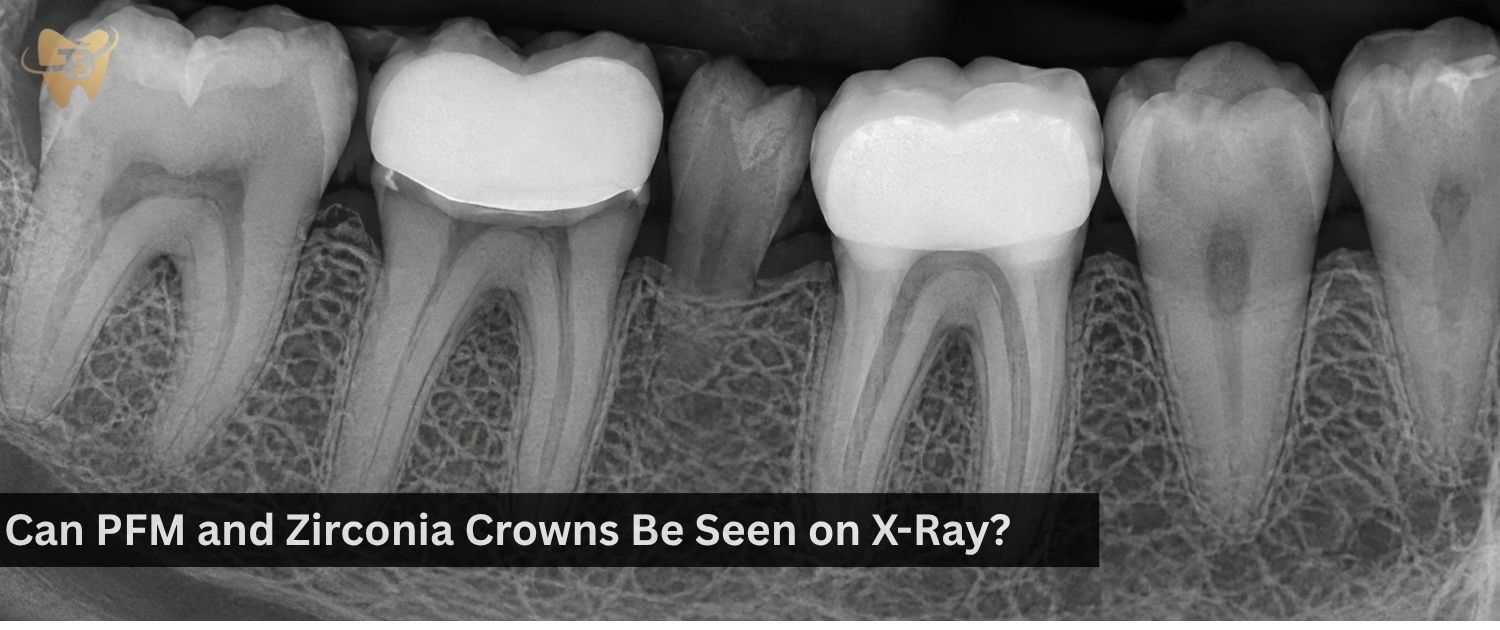
Yes. Both materials can be visible on dental imaging. The appearance depends on the material and its thickness. Your dentist uses radiographs to evaluate more than the crown itself. The root, bone, margins, and surrounding structures can provide important information.
A PFM vs zirconia crown X-ray comparison should therefore focus on diagnosis rather than appearance alone. If you have pain around an existing crown then an X-ray may be one part of the investigation. Your dentist may also examine the gums and test the tooth clinically.
What Crown Is Suitable After Root Canal Treatment?
A crown may be considered after root canal treatment when a tooth has lost significant structure. However not every root canal treated tooth automatically needs the same type of crown. The dentist first checks how much structure remains and where the tooth sits in the mouth.
Molars usually experience substantial heavy occlusal forces. Front teeth face different forces and aesthetic demands. Your dentist may therefore consider a different restoration design for each location. The final decision should follow a proper examination rather than a material preference alone.
How Can You Improve Crown Longevity?
Good daily care can support crown longevity. Brush twice daily and clean between your teeth. Regular dental visits can help identify problems before they become serious. Avoid using crowns to bite very hard objects such as ice or packaging.
If you experience grinding and clenching your dentist may discuss a protective night guard. This can be particularly relevant when strong forces repeatedly affect the restoration. Even the best crown needs good oral care. The tooth underneath still matters.
Final Thoughts on PFM vs Zirconia Crowns
A crown should do more than cover a damaged tooth. It should work with your bite and fit your smile. It should also protect the remaining structure when possible. That is why PFM vs Zirconia Crowns is best understood as a clinical comparison rather than a simple contest.
PFM offers a proven metal-ceramic design. Zirconia offers a strong ceramic alternative with several modern formulations. Both can have a place in contemporary restorative dentistry. Your dentist can compare the crown material, preparation, appearance, strength, cost, and expected longevity for your particular tooth.
For a patient deciding between these options, the most useful question may not be “Which crown is strongest?” Instead ask, “Which crown design fits my tooth and my needs?” That question leads to better treatment planning, clearer expectations, and more informed crown placement.
FAQ
1. Is zirconia or PFM better?
Neither is universally better. Zirconia offers a metal-free option with strong performance while PFM has a long clinical history. Your tooth location, bite, appearance, and remaining tooth structure should guide the choice.
2. What are the disadvantages of PFM crowns?
porcelain layer can also chip or wear opposing teeth in some cases.
3.Which crown is best for teeth in Pakistan?
There is no single best crown for everyone in Pakistan. Zirconia and PFM can both work well when the dentist selects the right material and design for your tooth.
4. Can I do MRI with zirconia crown?
Yes. Zirconia is not a magnetic metal and generally does not prevent an MRI. Always tell the MRI team about all dental restorations before your scan.
5. What happens to zirconia crowns after 10 years?
A well-maintained zirconia crown can remain functional beyond 10 years. Its condition depends on the fit, bite, oral hygiene, gum health, and any grinding or clenching habits.
6. Which crown is better, Emax or zirconia?
E.max can offer excellent translucency and a natural appearance. Zirconia generally provides higher strength. The better choice depends on whether appearance or resistance to heavy chewing forces matters more for your tooth.
7.What is the highest quality dental crown?
There is no single highest-quality crown for every situation. High-quality PFM, zirconia, and lithium disilicate crowns can all perform well when properly planned, fabricated, and fitted.
8.Why are dentists pushing the use of zirconia?
Zirconia has become popular because it combines strong mechanical properties with a metal-free design. Modern formulations also offer improved translucency compared with earlier zirconia materials.
9.Which brand is best for zirconia crowns?
There is no universally best zirconia brand. The specific zirconia formulation, laboratory quality, crown design, dentist’s preparation, and proper cementation can matter more than the brand name alone.