
Dental Inlays vs Onlays: Which One Is Right for Your Tooth?

When a tooth has damage that is too large for a filling but does not need a full crown you may hear about dental inlays and onlays. Both treatments restore damaged teeth while helping preserve healthy tooth structure. The main difference is where each restoration sits. An inlay fits inside the grooves of a tooth while an onlay can cover one or more raised areas called cusps.
Understanding this difference can help you make a more informed choice with your dentist. In this guide we will compare dental onlays and inlays including their uses benefits durability and treatment process. You will also learn how each option works and which restoration may better suit your damaged tooth.
Dental Inlays vs Onlays: A Quick Look
Dental Inlays vs Onlays becomes easier to understand when you picture a damaged tooth like a small cracked tile. An inlay repairs the inner section. An onlay protects a wider area. The right choice depends on your remaining tooth structure and the forces placed on that tooth.
Restoration | Main coverage | Common use | Tooth preservation |
Filling | Small damaged area | Small cavity | High |
Inlay | Inside the cusps | Moderate damage | High |
Onlay | Inside plus one or more cusps | Larger damage | High |
Crown | Entire visible tooth | Extensive damage | Lower |
What is the Difference between Inlays and Onlays?
A dental inlay sits inside the prepared area of a tooth. It does not cover the raised outer parts. Dentists often use it when tooth decay affects the center of a tooth while the surrounding tooth cusps remain strong. An inlay can replace a large filling when a direct filling may not provide enough support.
A dental onlay covers more of the tooth. It may cover one or several cusps when those areas have become weak. This added cusp coverage can protect a tooth that faces strong chewing forces. Both treatments are examples of indirect restorations because the restoration gets fabricated before final placement.
Inlay vs Onlay vs Filling vs Crown: What's the Difference?
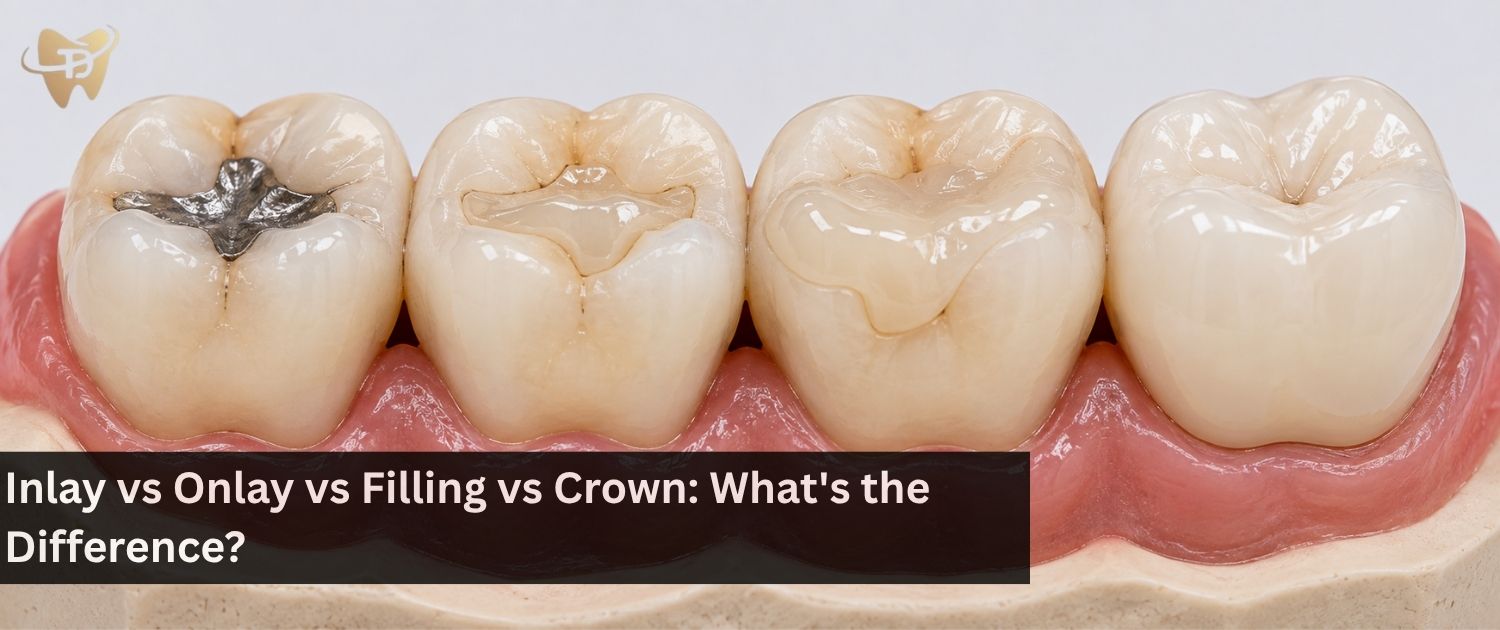
The inlay vs onlay vs filling decision starts with the amount of damage. A small cavity may need only a filling. A deeper or wider cavity may need an inlay. When the damage affects a cusp an onlay may offer better protection. A dental crown becomes an option when the tooth needs much broader coverage.
The inlay vs onlay vs crown comparison also involves tooth preservation. An inlay or onlay provides partial tooth coverage while a crown provides full tooth coverage. Your dentist may therefore consider how much sound tooth structure remains before selecting a restoration. Cleveland Clinic describes inlays and onlays as options for teeth with too much damage for a filling but not enough damage for a crown.
When Would a Dentist Recommend an Inlay Instead of an Onlay?
An inlay may suit you when damage stays inside the chewing surface. This often happens when a large cavity affects the center of a molar or premolar. If the outer cusps remain strong then covering them may not add much value. In that situation an inlay restoration can repair the affected area while supporting tooth preservation.
Your dentist will also consider the existing restoration and the amount of remaining dentin. An old large filling can leave parts of a tooth weaker than they appear. A MOD cavity affects the mesial occlusal and distal areas. Such a case may require careful MOD preparation and sometimes cusp support. The final choice should follow a complete clinical examination.
What Materials Are Inlays and Onlays Made Of?

Modern dental inlays and dental onlays can use several materials. Ceramic and porcelain offer a tooth-colored appearance. Composite resin can also work in selected situations. Gold remains a highly durable option for some patients. Each material has different strengths and different aesthetic qualities.
Ceramic inlays and ceramic onlays can provide a natural appearance when properly designed. Porcelain inlays and porcelain onlays can blend well with surrounding teeth. Gold inlays and gold onlays offer excellent wear resistance in suitable cases. Your dentist should match the restoration material to the tooth’s location and your functional needs.
How Long Do Inlays & Onlays Really Last?
The lifespan of an inlay or onlay depends on many factors. Your oral hygiene matters. So does your bite. Heavy bite forces can challenge a restoration over time. Grinding and other parafunctional habits may increase the risk of fracture or wear. Regular dental visits can help your dentist monitor the restoration.
Clinical research reports strong survival for many ceramic and resin restorations. One systematic review found estimated ceramic survival around 92% to 95% at five years and about 91% at ten years. However individual results can vary considerably. Fracture and chipping remain important technical concerns.
What Can Cause an Inlay or Onlay to Fail?
Problems can include debonding and secondary caries. A restoration can also chip or fracture under heavy forces. Poor cleaning around the margins may allow new decay to develop. In some cases pulp health can become a concern if the original damage was deep. These risks make regular restorative dental care important.
Onlay or Crown: Do I Need an Onlay or a Crown?

The onlay vs crown decision often comes down to how much healthy tooth remains. An onlay may work when the tooth still has strong walls and adequate coronal tooth structure. It can provide cusp protection without covering the entire visible tooth. This approach can preserve more of your natural tooth.
A crown may become more suitable when the tooth has extensive damage or a major fracture. It can provide full tooth coverage around the remaining structure. However the choice is not simply about choosing the strongest restoration. Your dentist must also consider pulp health and the tooth’s functional requirements.
What's the Dental Inlays and Onlays Procedure Like?
The inlay onlay procedure begins with an examination. Your dentist checks the tooth and may take X-rays. Next comes tooth preparation. The dentist removes decay and any weak material. A scan or impression then records the prepared tooth so the restoration can fit accurately.
Modern clinics may use a digital dental scan and a digital impression instead of traditional impression materials. With CAD/CAM dentistry a clinic may design and manufacture the restoration on site. Systems such as CEREC can support same-day workflows in suitable cases. Other dentists use a dental laboratory for custom fabrication.
Stage | What happens |
Examination | Dentist checks the damaged tooth |
Preparation | Decay and weak areas are removed |
Scan | Digital data records the tooth shape |
Design | Restoration design matches the tooth |
Fabrication | Material is shaped for the case |
Trial fit | Dentist checks contacts and bite |
Bonding | Final restoration is secured |
Is There Any Sensitivity After Inlay or Onlay Placement?

Some sensitivity can occur after placement. You may notice a short reaction to cold or hot drinks. The tooth has just undergone tooth preparation and restoration. Mild symptoms can settle as the tooth adjusts. Your dentist can explain what level of discomfort should be expected in your case.
Persistent or severe pain deserves attention. Pain when biting can suggest a problem with the bite check or restoration fit. Swelling can point to a deeper dental issue. Your dentist may inspect the restoration margins and restoration contacts. They may also check for cracks or signs of pulpal disease.
Why are Inlays and Onlays More Expensive Than Fillings?
A filling can often be placed during one appointment. Inlays and onlays may require more planning and fabrication. They are indirect fillings that can involve scanning or impressions and custom production. A traditional workflow may involve a temporary restoration before the final piece arrives from the laboratory.
The material also affects the dental restoration cost. Your inlay cost can differ from your onlay cost. The dental inlay cost and dental onlay costs also vary by location and practice. Insurance benefits can affect your final payment. Ask your dentist for a written estimate before treatment.
Best Clinic in Lahore for Dental Inlays vs Onlays
If you are comparing clinics for Dental Inlays vs Onlays you should look beyond the advertised price. A quality restorative dentist should examine your tooth before recommending treatment. They should explain why an inlay or onlay suits your case. They should also discuss alternatives such as a filling or crown.
Look for a clinic that uses careful restoration design and precise restoration fit. Modern scanning can improve the digital workflow while a skilled laboratory can provide careful laboratory fabrication. Ask how the clinic handles bite adjustment and follow-up care. Your treatment should focus on preserving healthy tooth structure rather than simply choosing the most expensive option.
Conclusion: Dental Inlays Vs Onlays: Which One Is Best For Your Tooth?
Dental Inlays vs Onlays is not really a contest between two identical treatments. An inlay generally restores damage within the cusps. An onlay can extend over one or more cusps. Your dentist chooses between them after assessing the damaged area and the strength of the remaining tooth.
Good tooth restoration should solve the current problem while protecting what remains. A filling may suit a smaller cavity. An inlay may suit damage within the chewing surface. An onlay may help when a cusp needs protection. A crown may become necessary when the tooth has lost extensive structure. Your dentist can build the right restorative plan around your tooth and your needs. Research supports the use of indirect restorations in suitable posterior teeth while also showing that material and patient factors influence outcomes.
FAQ
1.Are inlays better than onlays?
Neither is always better. An inlay suits damage within the tooth while an onlay works better when one or more cusps need protection.
2. What are the disadvantages of onlays?
Onlays can cost more than fillings and may need multiple treatment steps. They can also chip or loosen if exposed to heavy bite forces or grinding.
3.Is a dental inlay painful?
A dental inlay procedure is usually performed with local anesthesia so you should not feel significant pain. Mild sensitivity may occur after treatment and usually settles with time.
4. Is an onlay cheaper than a crown?
An onlay is often less costly than a crown because it covers less of the tooth. The actual cost depends on the material used and your dentist’s fees.
5. Which is better for a root canal, an onlay or a crown?
It depends on how much healthy tooth remains after the root canal. An onlay may work when enough structure remains while a crown may provide better protection for a severely weakened tooth.
6. How long does a dental inlay last?
A dental inlay can last many years with good oral hygiene and regular dental care. Its lifespan depends on the material used and factors such as grinding and bite forces.
7.Why do an inlay instead of a filling?
An inlay can provide a stronger custom restoration when a cavity is too large for a regular filling. It can also help preserve more healthy tooth structure than a crown.
8.Are dental inlays expensive?
Dental inlays usually cost more than standard fillings because they require custom fabrication and precise placement. Your material choice and location can also affect the final cost.
9.Is an onlay as strong as a crown?
An onlay can provide excellent strength for a tooth with moderate damage but it does not provide the same full coverage as a crown. Your dentist chooses based on the remaining tooth structure.
10.Can I get an onlay after a root canal?
Yes. An onlay may be possible after a root canal when enough healthy tooth structure remains. Your dentist will assess the tooth before deciding between an onlay and a crown.