
Black Triangles Between Teeth: Symptoms and Treatments
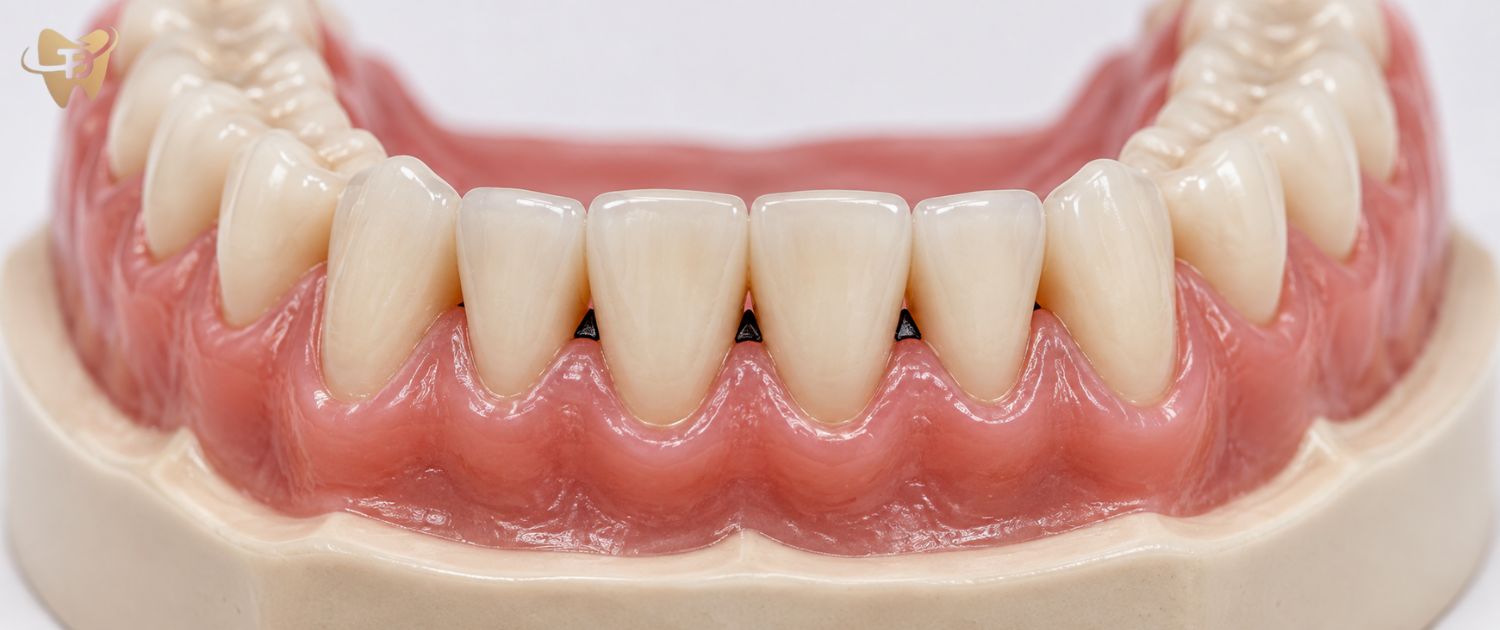
Have you noticed small dark spaces between your teeth when you smile? These spaces are often called black triangles between teeth. They usually appear near the gum line when the gum tissue does not fully fill the space between two teeth. While they can affect your smile, they may also point to changes in your gum health or tooth position.
Common causes include gum recession, gum disease, aging, tooth shape, and orthodontic treatment. The good news is that several treatment options are available. Your dentist can first find the cause and then suggest the right approach. This guide explains the symptoms, causes, assessment, and treatment options in simple terms.
What Is a Black Triangle?
A black triangle is a dark triangular space between two teeth near the gum line. Dentists often call this an open gingival embrasure. It appears when the interdental papilla does not completely fill the space beneath the tooth contact area.
This space may look like a tiny shadow. Yet its cause can involve several structures. The gingival tissue sits between the teeth while the tooth crowns meet higher up. The area below them depends on healthy periodontal tissues and supporting bone.
What Creates Black Triangle Teeth?
Several factors can create black triangle teeth. Gum disease can damage the tissues that support the teeth. As the condition progresses it may contribute to gum recession and changes around the roots. Loss of support can make the dark space more visible.
Tooth anatomy matters too. Tooth shape can influence how much papillary fill you see. Triangular teeth often have a narrower area near the gum. A wider space can then remain below the contact point. Root position can also influence the final appearance.
Common Causes Behind Black Triangle Teeth
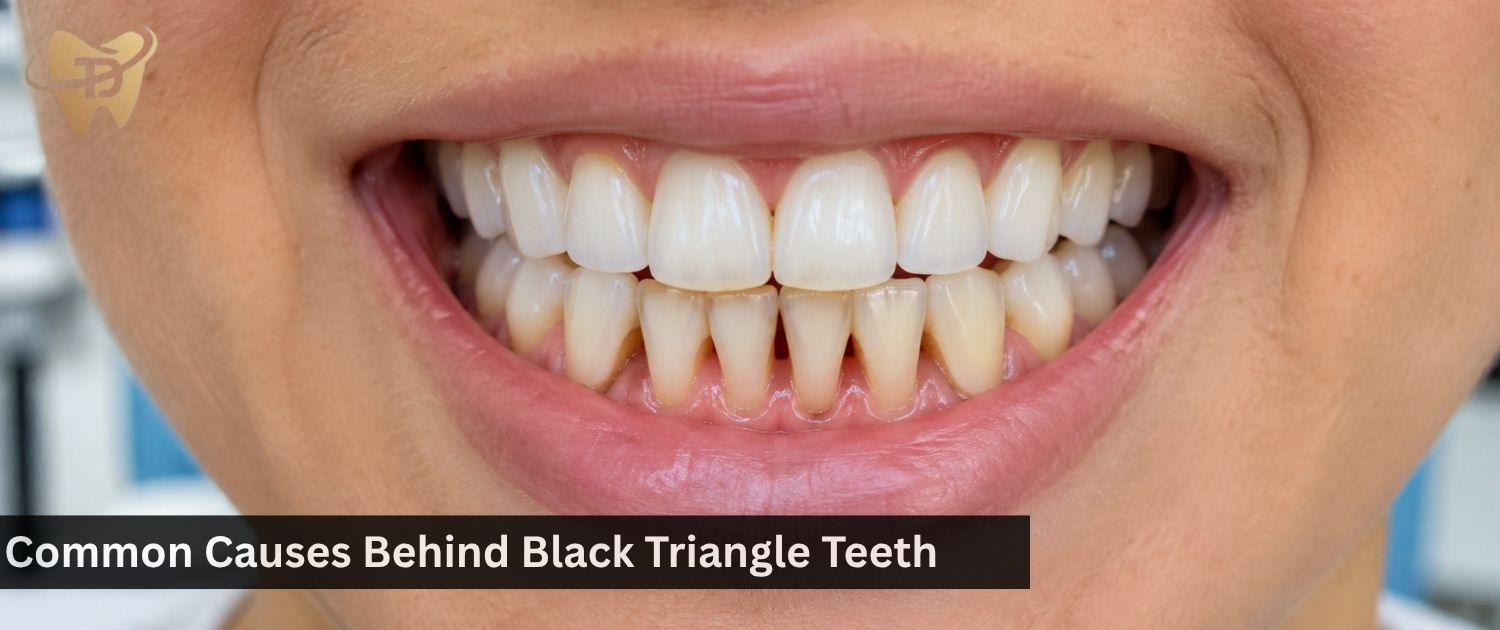
Age can gradually change the gum tissue and supporting structures. Poor gum health may speed up this process. Orthodontic movement can also change tooth position. Research shows that the distance between the contact area and alveolar bone crest plays an important role in open embrasure formation.
Possible cause | What can happen |
Gum disease | Tissue and bone support may reduce |
Gum recession | More tooth structure becomes visible |
Tooth shape | Narrow crowns can leave larger spaces |
Tooth position | Teeth may create a wider embrasure |
Orthodontic movement | New spaces may become visible |
Aging | Natural tissue changes may reduce papillary fill |
Are Black Triangles Normal, and Will They Get Worse
For many people black triangles teeth are mainly a cosmetic concern. They do not automatically mean that your mouth has a serious problem. However new spaces deserve attention when they appear with bleeding gums or other signs of gum disease.
Whether the space changes depends on its cause. Stable tooth anatomy may stay unchanged for years. Active periodontal disease can progress without treatment. That is why a dental and periodontal assessment matters before choosing cosmetic treatment.
What Symptoms Should You Look For?
The most obvious sign is a dark triangular area between two teeth. You may also notice gaps between teeth that seem larger than before. Food may collect there more often. Some people also notice sensitivity near the gum line.
Watch for bleeding or swollen gums too. These symptoms can suggest inflammation rather than a simple cosmetic issue. Bad breath can also occur with gum disease. If several signs appear together your dentist may need to check the supporting tissues and bone.
How Are Black Triangles Assessed?
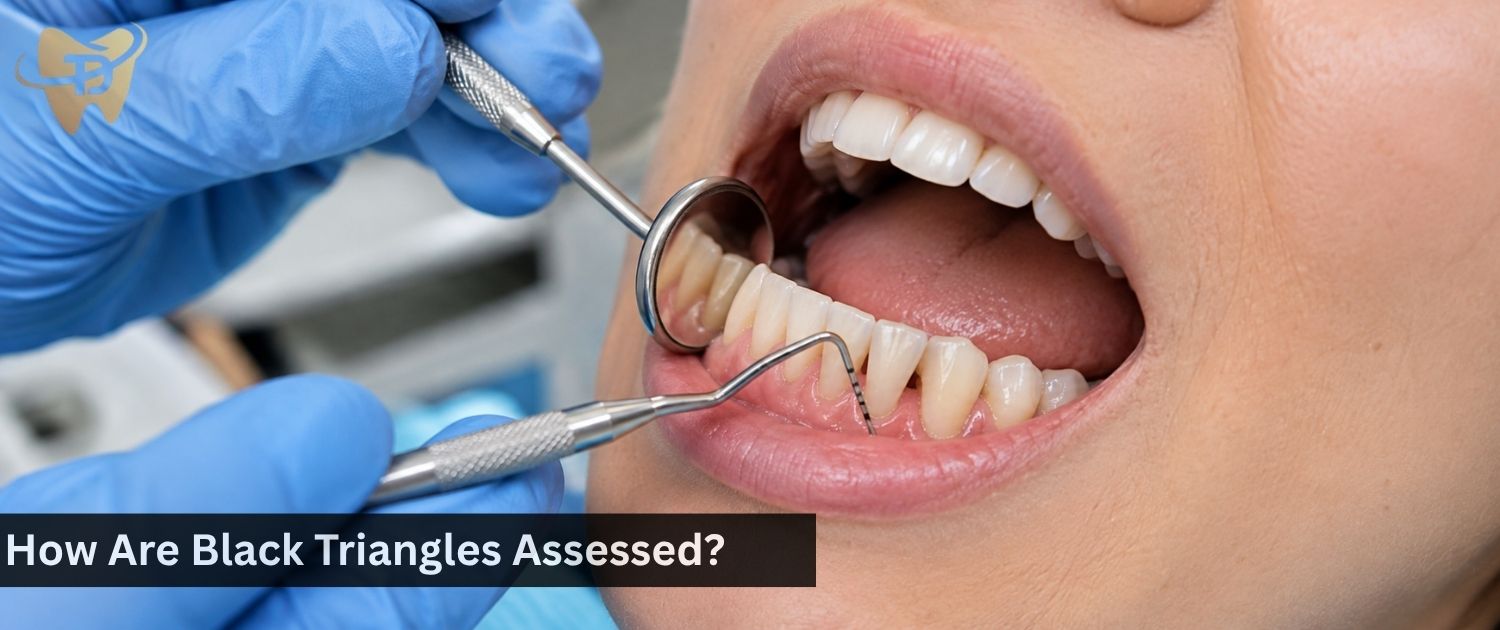
A careful dental assessment starts with your teeth and gums. Your dentist looks at the papilla shape and tooth position. They also check the contact point and the amount of visible space. This helps separate a cosmetic issue from a periodontal problem.
A dental X-ray may provide more information when bone support needs checking. A periapical radiograph can show the roots and the interradicular area. Your dentist may assess the alveolar bone crest and the contact point to bone crest distance.
Assessment area | Why it matters |
Gum tissue | Shows recession and inflammation |
Contact point | Shows where the teeth meet |
Tooth roots | Helps assess root angulation |
Alveolar bone | Shows supporting bone levels |
Tooth position | Helps identify spacing causes |
X-ray findings | Helps assess bone and root anatomy |
How Are Black Triangles Treated?
There is no single black triangle treatment for everyone. The correct approach depends on the cause. Active gum disease usually needs attention first. Cosmetic work cannot replace proper periodontal care when infection or tissue damage exists.
Once your gum health is stable your dentist can consider cosmetic or orthodontic options. Composite bonding can reshape tooth edges. Orthodontics can change tooth position. More advanced cases may need periodontal or restorative care.
Composite Bonding for Black Triangles
Composite bonding for black triangles can add tooth-colored material beside the gap. This changes the visible tooth contour. It may work well when tooth shape contributes to the space. The dentist must preserve proper cleaning access around the restored area.
Veneers offer another cosmetic option. They can change tooth proportions across the visible smile. In selected cases they may form part of a broader smile makeover. However veneers are different from simple bonding and require careful planning.
Orthodontic and Restorative Options
Orthodontic treatment may help when tooth position creates the space. Controlled orthodontic tooth movement can improve alignment and contact relationships. Interproximal reduction may also be considered in selected cases. Dentists often call this procedure IPR.
Restorative care can also help reshape teeth. Prosthetic treatment may suit some complex cases. Other gingival restorative options can address the soft tissue appearance. Your treatment plan should match your anatomy rather than follow a one-size-fits-all approach
Periodontal Treatment and Gum Procedures
When tissue loss comes from periodontal problems the priority changes. Periodontal treatment aims to control disease and protect remaining support. In selected cases gum grafting may help certain areas of recession. However it does not automatically rebuild every missing papilla.
Specialist procedures may also focus on papilla reconstruction. Modern research includes approaches such as hyaluronic acid and injectable platelet-rich fibrin. Current evidence shows promise yet researchers still note limitations around long-term results and study quality.
What Treatments Does The Dentist Offer for Black Triangles?
The Dentist can assess the reason behind the space before suggesting treatment. Options may include composite bonding, veneers or orthodontic care when appropriate. If gum health contributes to the problem the treatment plan may first focus on periodontal needs.
A tailored approach matters because two people can have similar looking spaces for very different reasons. One patient may need tooth reshaping. Another may need gum care. A detailed assessment helps match treatment with the underlying anatomy.
Why Choose The dentist for Black Triangles
Choosing a dental provider for black triangle between teeth concerns means looking beyond the visible gap. Your dentist should assess the gums, roots, bone and tooth shape. That wider view helps avoid treating the appearance while missing an underlying problem.
The Dentist can combine cosmetic dentistry with functional planning when needed. The goal is a balanced smile that remains easy to clean. Treatment should also respect the natural gingival tissue and surrounding structures rather than simply filling every visible space.
Can Black Triangles Appear After Braces or Invisalign?
Many patients notice black triangles after orthodontic treatment. Teeth can look different after alignment because their positions change. The movement may reveal spaces that were previously hidden by crowding or overlapping teeth. This does not mean braces caused poor dental health.
Patients can also notice black triangles after Invisalign. Clear aligners move teeth in controlled stages. The final appearance depends on tooth anatomy and tissue support. Recent research links open embrasures with factors such as contact point position and crestal bone distance.
Can Interproximal Bone Loss Cause Black Triangles?
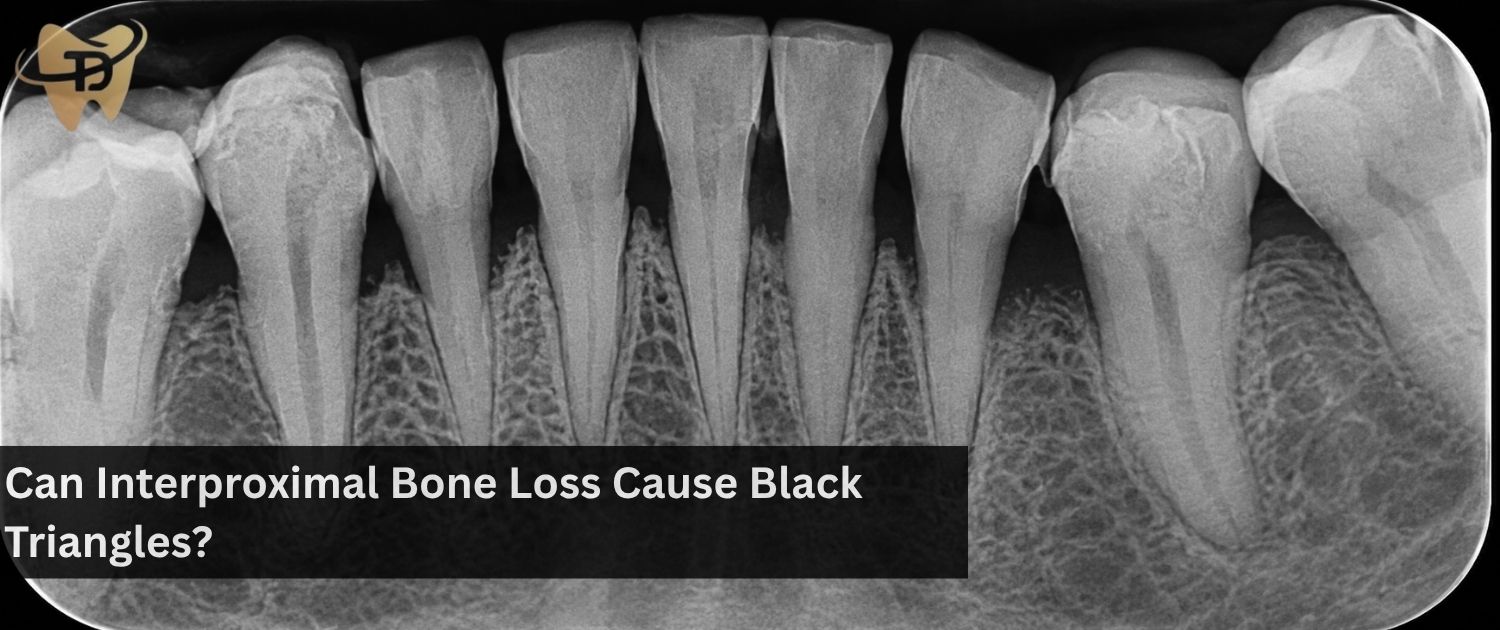
Interproximal bone loss can affect the support beneath the papilla. When the interproximal bone changes the soft tissue may not fully occupy the space. This can create visible gum line triangles between otherwise healthy-looking crowns.
The relationship is not always simple. Root position and the distance between adjacent roots can also matter. Root angulation may change the available space between teeth. The distance between the contact area and bone crest remains an important clinical factor.
How Can You Prevent Black Triangles From Getting Worse?

You cannot prevent every black triangle. Natural anatomy plays a role. Still you can protect your gum health with gentle brushing and daily cleaning between your teeth. Regular dental visits can also help identify gum inflammation before it causes greater damage.
Avoid aggressive brushing near the gums. Follow the cleaning method recommended by your dental professional. If you notice new recession or bleeding do not wait for the space to become larger. Early assessment can protect the periodontal tissues and supporting structures.
A Simple Clinical Example
Imagine a patient who finishes orthodontic treatment and notices a small dark space between two front teeth. The teeth are straight and healthy. There is no active gum disease. The dentist finds a longer contact point to bone crest distance and a narrow tooth shape.
In this situation the treatment plan may differ from someone with periodontal disease. The first patient might discuss tooth reshaping or bonding. The second patient may need periodontal treatment first. The same appearance can therefore require completely different care.
Black Triangle Teeth Treatment at a Glance
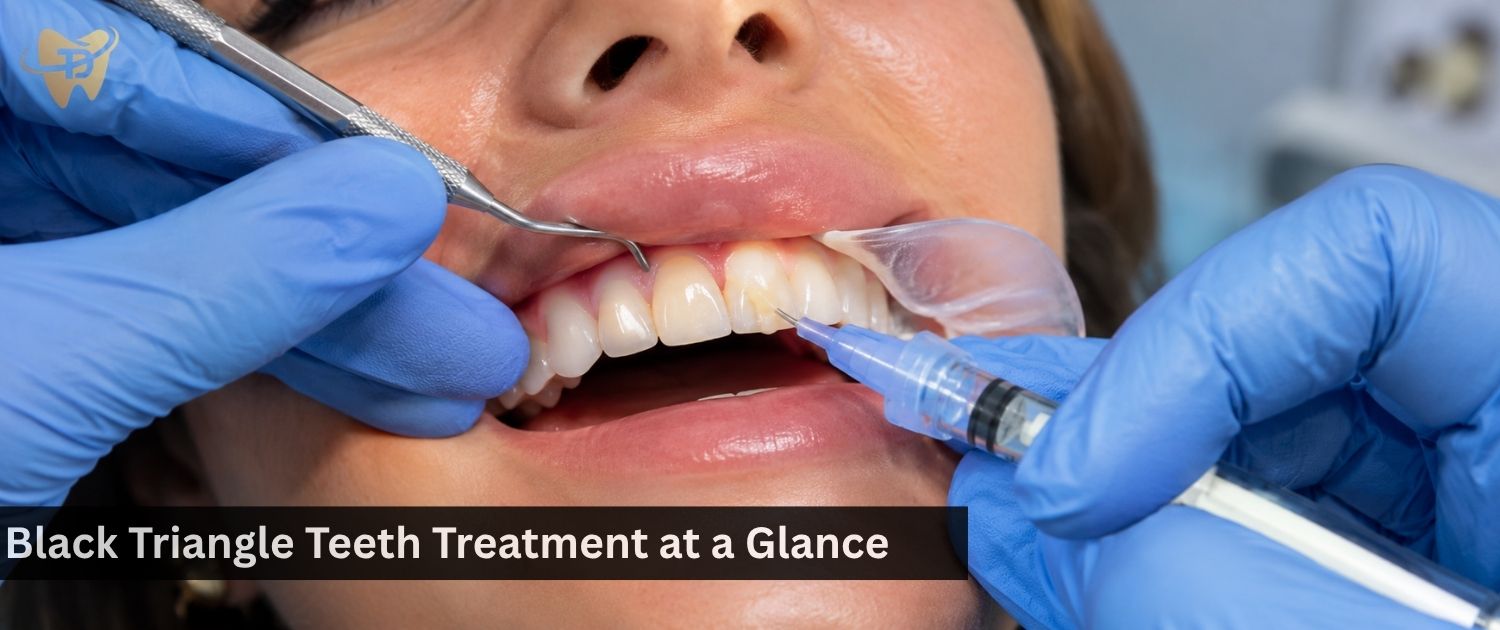
Treatment | When it may help | Main purpose |
Composite bonding | Tooth shape contributes to gap | Change tooth contour |
Orthodontics | Tooth position contributes | Improve alignment |
IPR | Selected orthodontic cases | Refine tooth proportions |
Veneers | Cosmetic tooth shape concerns | Change visible tooth form |
Periodontal treatment | Active gum disease | Control disease |
Gum grafting | Selected recession cases | Improve soft tissue coverage |
Papilla procedures | Selected papilla defects | Increase soft tissue volume |
What Should You Ask Your Dentist?
Before choosing black triangle teeth gap treatment ask what caused the space. Ask whether your gums show signs of disease. You can also ask whether a dental X-ray is needed to evaluate bone levels and root position.
It helps to discuss all realistic choices. Ask how bonding may affect cleaning. Ask whether orthodontic treatment could improve tooth position. If you are considering The Dentist ask how the proposed result will fit your natural smile.
Conclusion
Black triangles between teeth can result from gum changes, tooth anatomy, bone support or orthodontic movement. The visible space may look simple. Its underlying cause can be much more complex.
A proper assessment gives you a clearer path forward. Depending on the cause you may consider bonding, orthodontics, veneers or periodontal care. New or changing spaces deserve professional attention. With the right plan your dentist can protect your oral health while improving your smile.
FAQ
1. How to treat black triangles between teeth?
Black triangles can be treated with gum treatment or composite bonding. Orthodontic treatment may also help when tooth position is the cause.
2. What causes dental black triangles?
They usually happen when the gum between teeth shrinks. Gum disease and changes in tooth position can also cause them.
3.Which celebrities have black triangles in their teeth?
Some celebrities may have visible black triangles in photos. However these spaces are not always clearly confirmed as black triangles.
4. Does black triangle mean bone loss?
Not always. A black triangle usually means there is not enough gum tissue between the teeth.
5. Do black triangles ever go away?
Small black triangles may improve if the cause is treated early. Larger spaces usually need dental treatment to close or reduce them.
6. What are the early signs of bone loss in teeth?
Early signs can include bleeding gums and gum recession. Bad breath and loose teeth can appear as gum disease progresses.
7.Can you regain bone loss in teeth?
Lost bone does not always grow back on its own. Treatment can stop further loss and some cases may benefit from bone regeneration procedures.